Our consolidated team webpage is currently under development. Some content may be incomplete.

Reference Projects
A selection of reference projects delivered by the partner companies within the Technology Through Innovation (TTI) network.
IIoT Monitoring Systems
Real-time condition monitoring solutions for industrial, transport, and automation systems
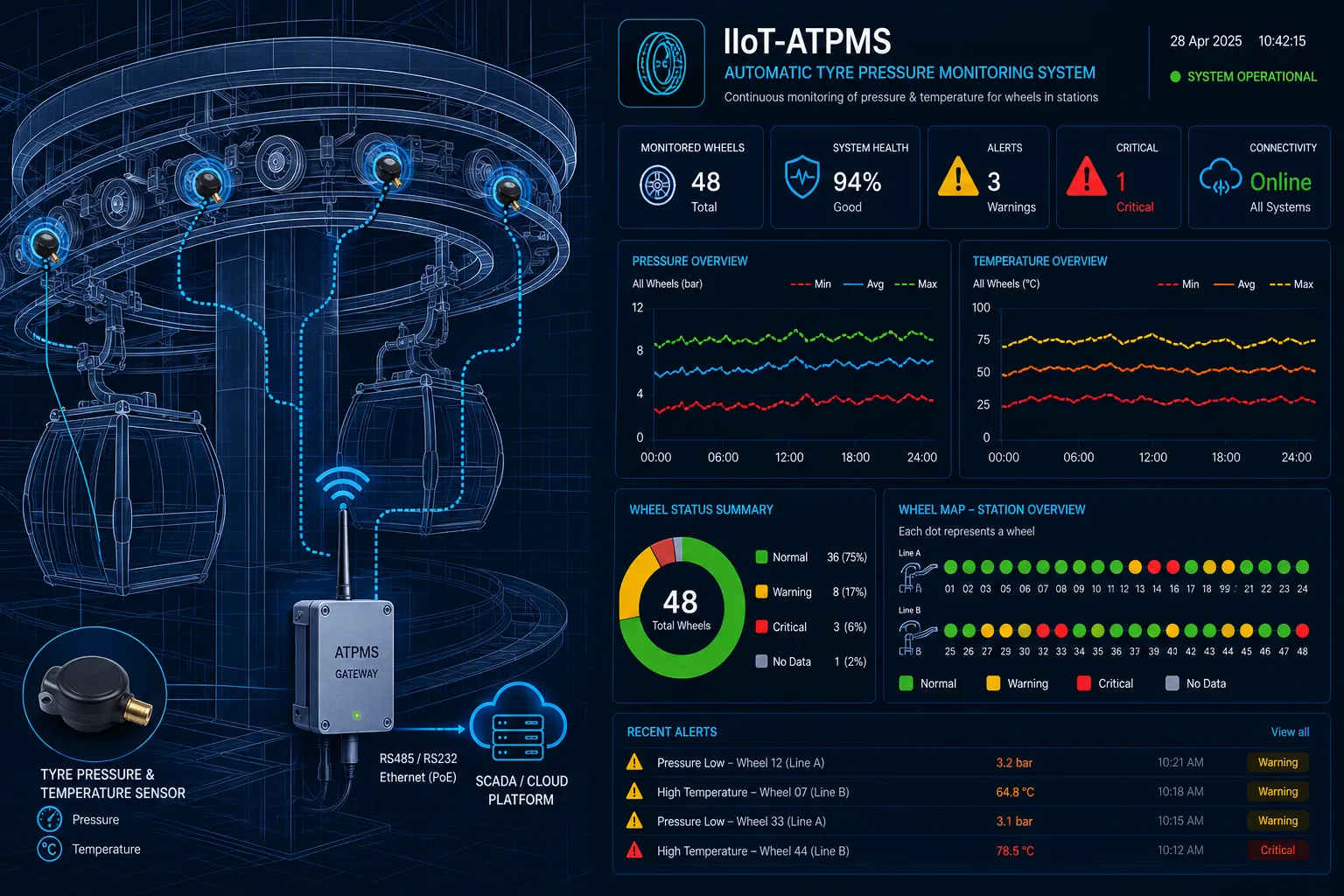
IIoT-ATPMS
Automatic Tyre Pressure Monitoring System
Continuous monitoring of tyre pressure and temperature for early detection of air loss, overheating, and mechanical issues in critical transport systems such as cable cars, amusement rides, and industrial conveyors.
Key features:
Pressure & temperature monitoring • Industrial-grade sensors • SCADA visualization • Real-time alarms • Local & remote access
Industries:
Cable Cars • Amusement Rides • Industrial Transport
It enables early detection of air loss or overheating, allowing preventive maintenance actions before critical failures occur.
Typical applications:
• Cable cars with automatic coupling systems
• Amusement rides and transport systems
• Industrial conveyor systems with pneumatic stabilization
Data acquisition is performed via field antennas communicating over RS485/RS232 or Ethernet (PoE), with flexible deployment options including local servers or remote SCADA systems.
Structural Vibration & Infrastructure Monitoring
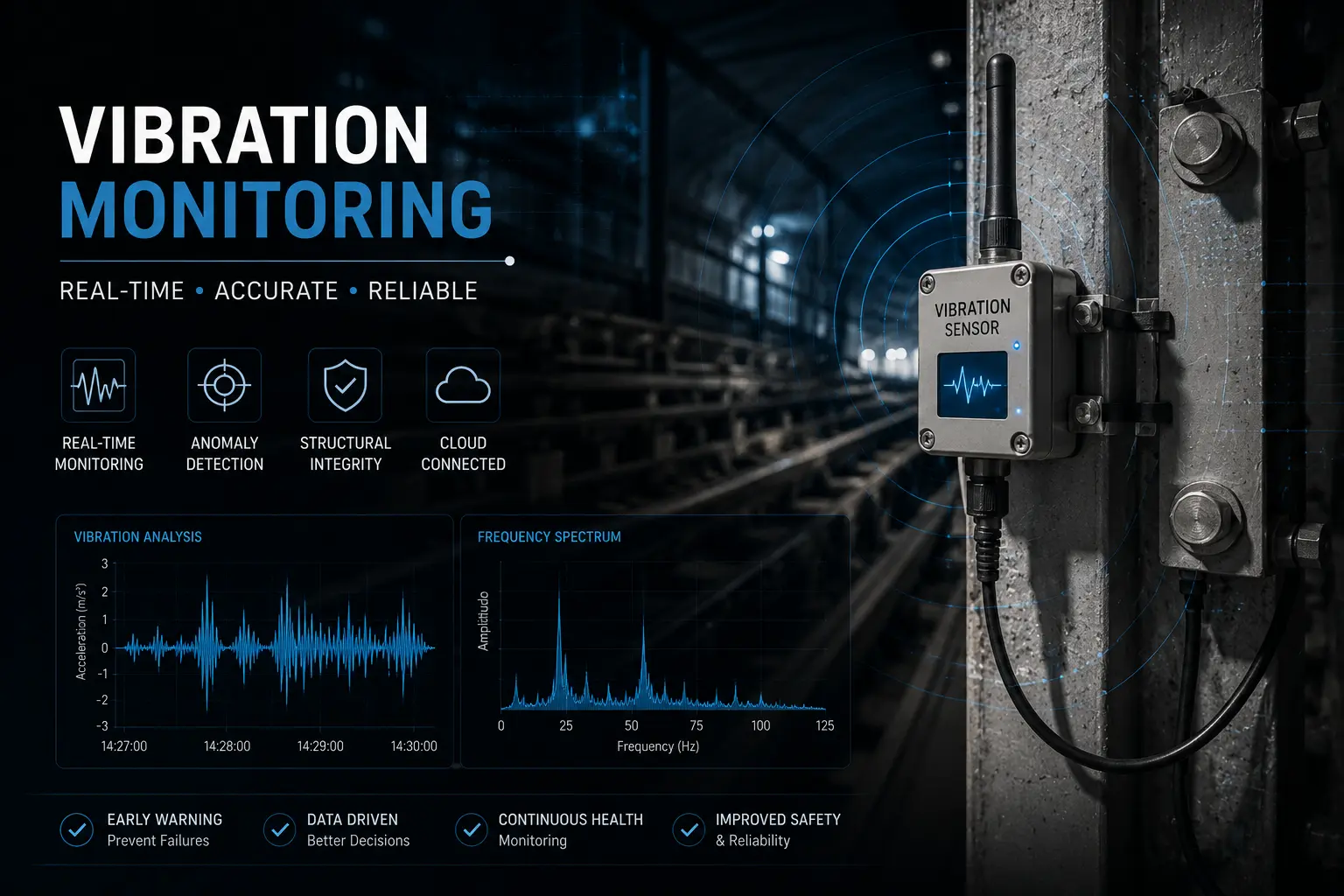
Vibration, Structural Integrity & Infrastructure Health Monitoring
Real-time structural monitoring solution designed to detect abnormal vibration behavior, infrastructure degradation and mechanical integrity issues in transportation systems, industrial installations and critical support structures.
Key features:
Structural vibration monitoring • Health Analysis • Central data processing • Real-time alerts • SCADA visualization
Industries:
Rail Systems • APM • Industrial Plants • Airport Infrastructure • Transportation Infrastructure
The system combines vibration sensors, intelligent data acquisition, cloud connectivity and real-time analytics to monitor structural behavior and detect abnormal vibration patterns, mechanical degradation or infrastructure instability.
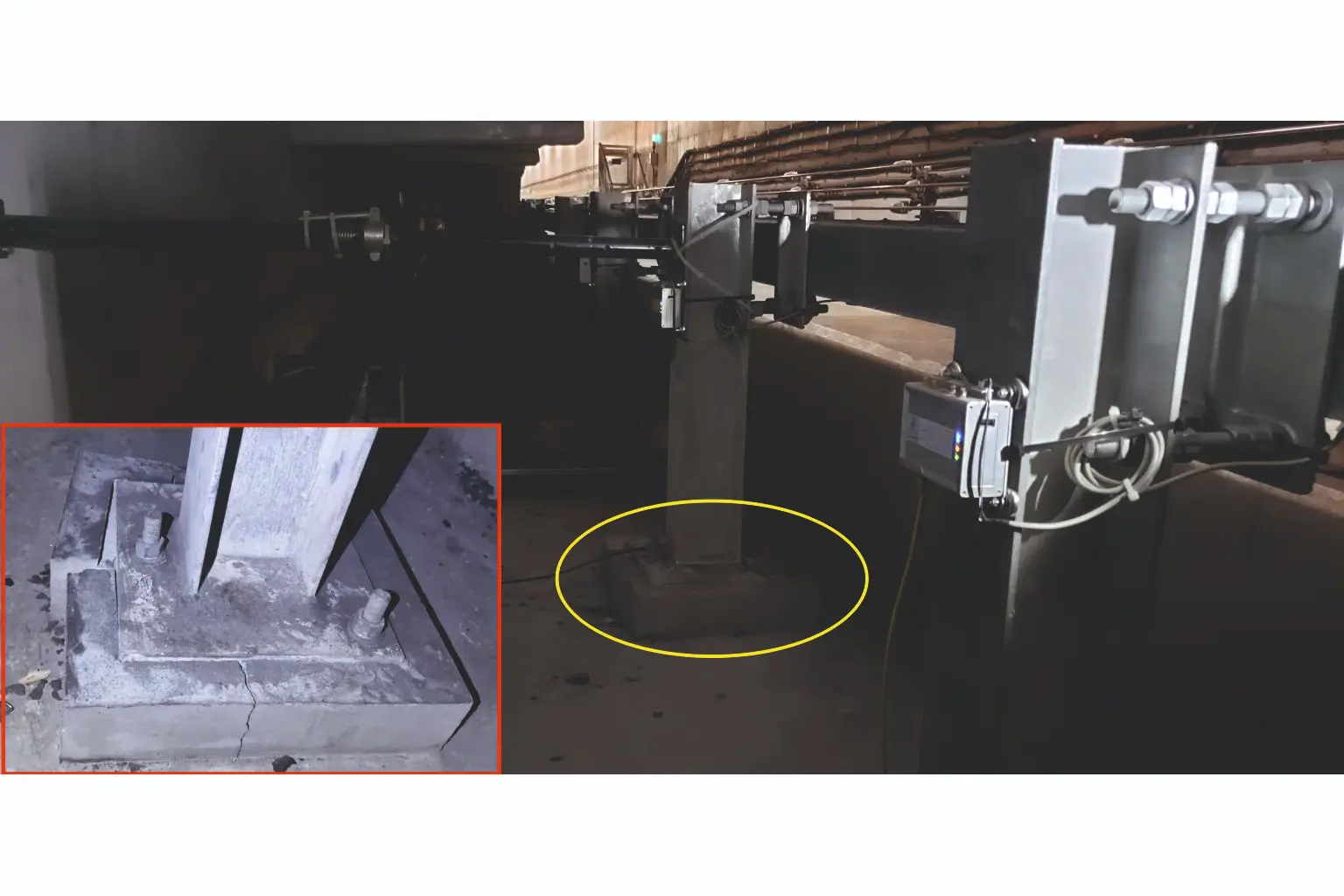
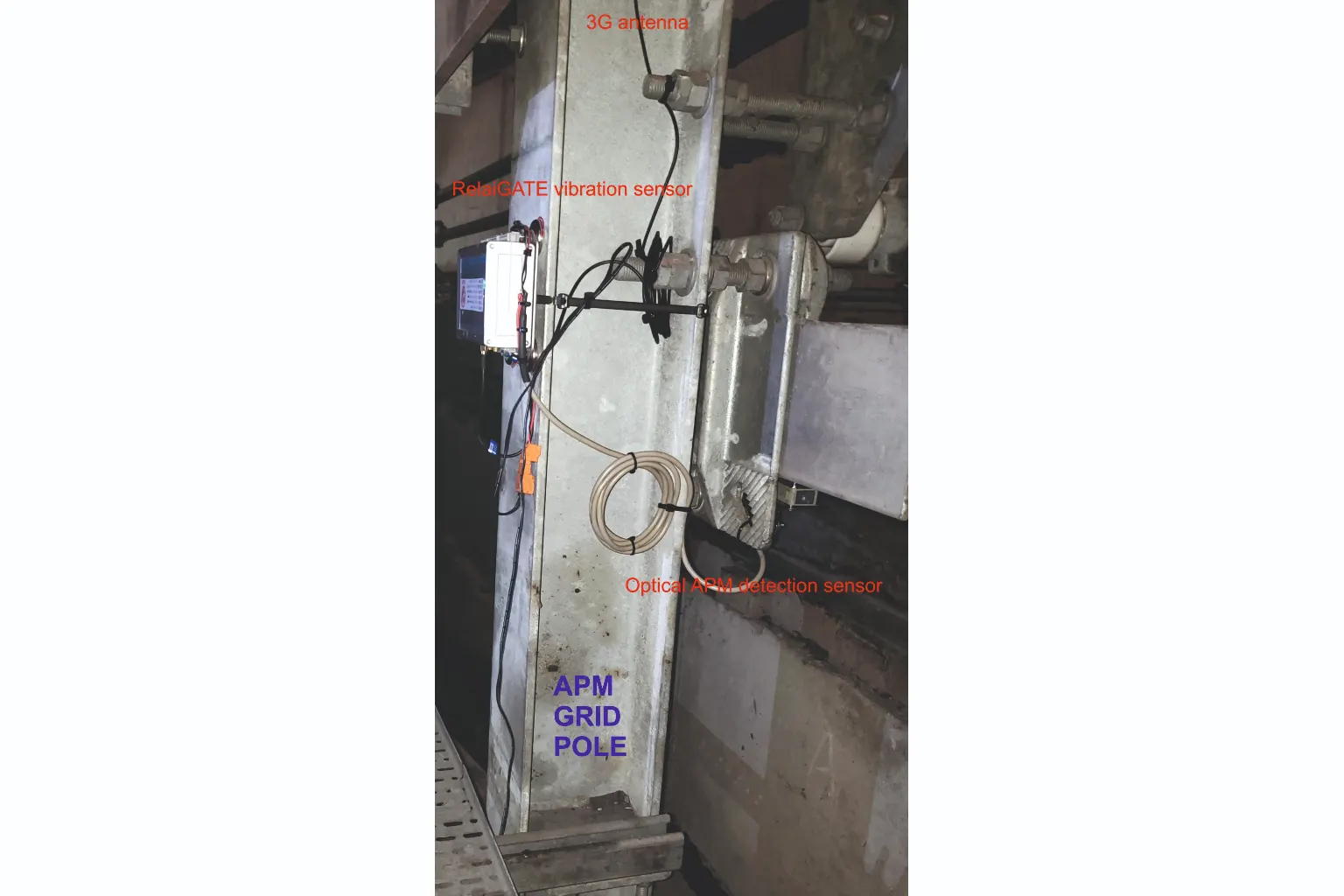
Originally field-tested on APM transportation systems and support structures, the platform enables operators to identify potential issues before critical failures occur, improving safety, reliability and maintenance planning.
The modular architecture allows integration into existing SCADA systems, remote monitoring platforms and centralized maintenance environments.
IIoT Condition Monitoring & Predictive Maintenance
Predictive Analytics, Environmental & Condition Monitoring
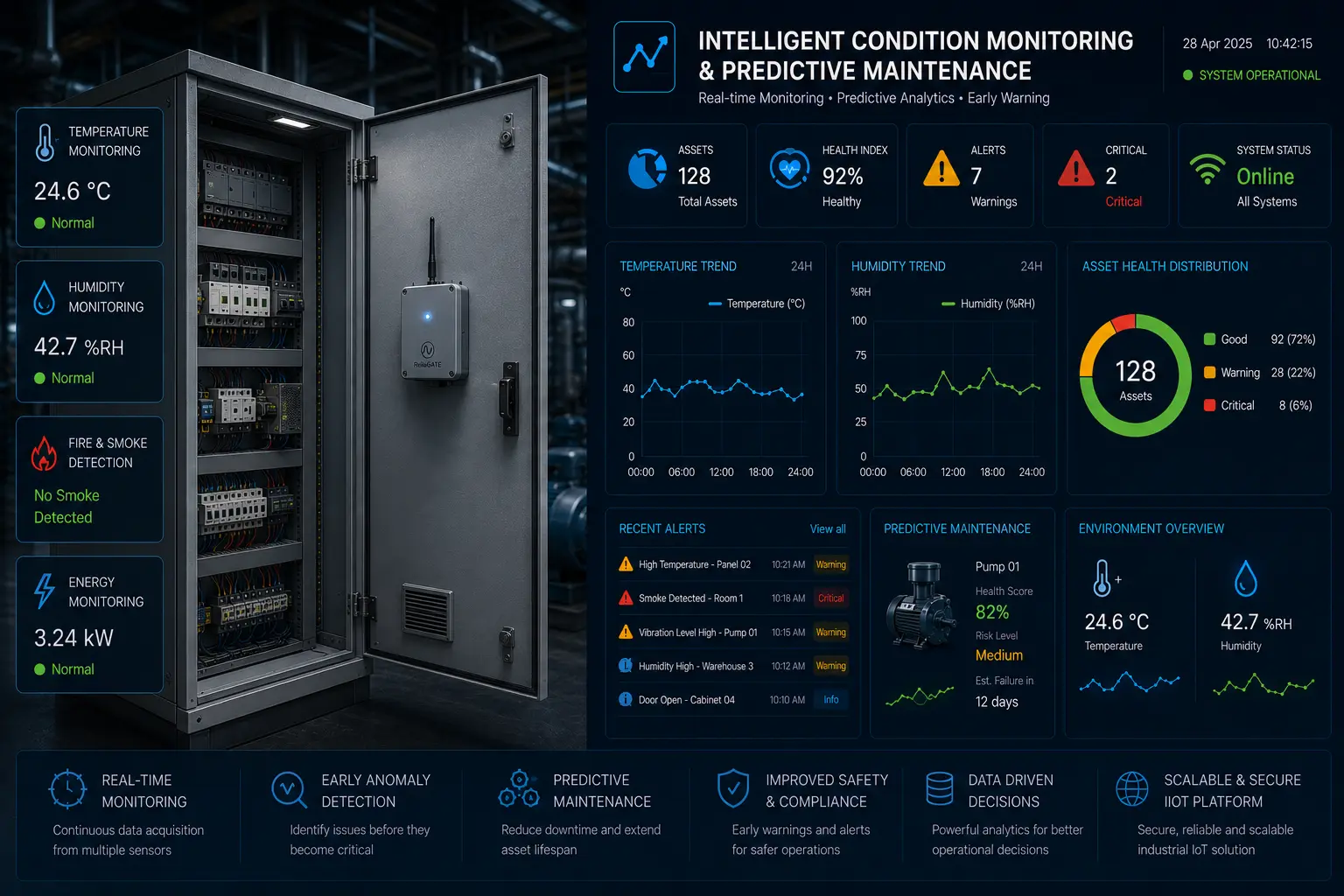
Intelligent monitoring platform combining IIoT connectivity, environmental sensing, thermal supervision and predictive analytics to improve equipment reliability, operational safety and preventive maintenance planning.
Key features:
Multi-sensor integration • Thermal & environmental monitoring • Flexible communication (LTE, Wi-Fi, fiber) • Central data processing • Real-time alerts • SCADA visualization
Industries:
Industrial Automation • Electrical Installations • Industrial Plants • Transportation Infrastructure
The solution combines IIoT connectivity, environmental monitoring, thermal supervision, intelligent alarms and centralized analytics to continuously evaluate equipment condition and operational performance in real time.
By analyzing temperature, humidity and operational data, the platform supports early anomaly detection, fire prevention strategies, predictive maintenance planning and improved system reliability.
Its modular architecture allows integration of multiple sensor technologies, cloud dashboards, SCADA systems and remote supervision platforms, enabling scalable monitoring solutions tailored to customer requirements.
APM & Airport Monitoring Systems
Specialized Monitoring for Automated Transport & Airport Infrastructure
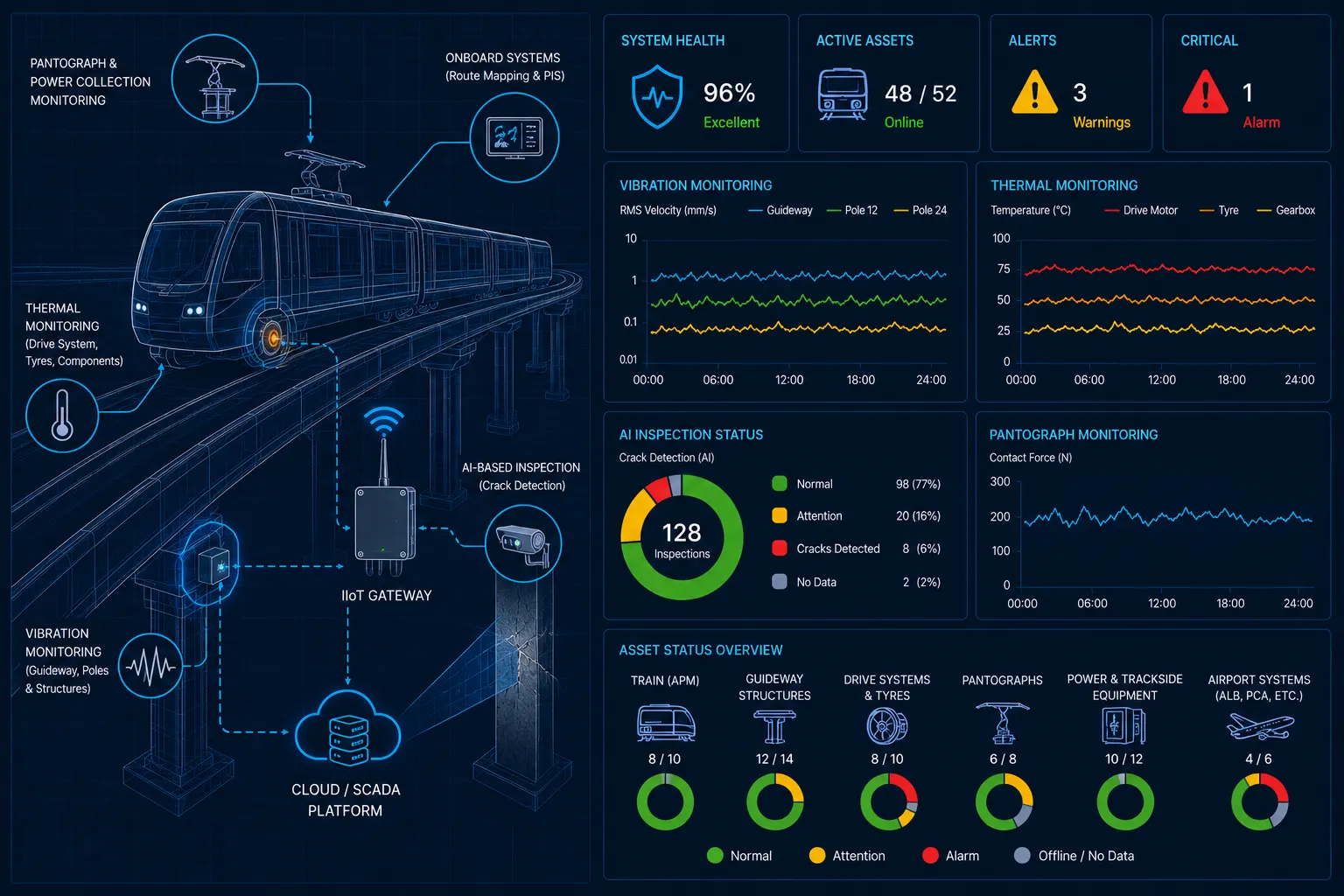
Monitoring solutions for Automated People Movers (APM) and airport systems, including vibration analysis, thermal monitoring, and AI-based structural inspection for predictive maintenance and operational safety.
Key features:
Vibration monitoring • Thermal analysis • AI crack detection • MQTT/cloud integration • High-speed data acquisition
Industries:
Airports • Automated People Movers (APM) • Transport Systems • Industrial Automation
The solutions cover both onboard and trackside monitoring, combining multiple sensing technologies and data acquisition systems to provide comprehensive system insight.
Key applications include:
• Trackside vibration monitoring of structural elements (e.g. guideway poles)
• Thermal monitoring of drive systems, tyres, and moving mechanical components
• Monitoring of pantograph systems and power collection elements
• AI-based inspection of structural components (e.g. crack detection in concrete)
• Onboard systems such as dynamic route mapping and passenger information displays
Additional developments include monitoring solutions for aircraft loading bridges (ALB), PCA systems, and apron equipment, supporting both fixed installations and mobile measurement setups.
Depending on the application, data can be processed locally or transmitted to centralized or cloud-based platforms for visualization, analysis, and predictive maintenance planning.
Wireless Power & Data Transmission (WAPDT)
Contactless Power Supply & Data Communication
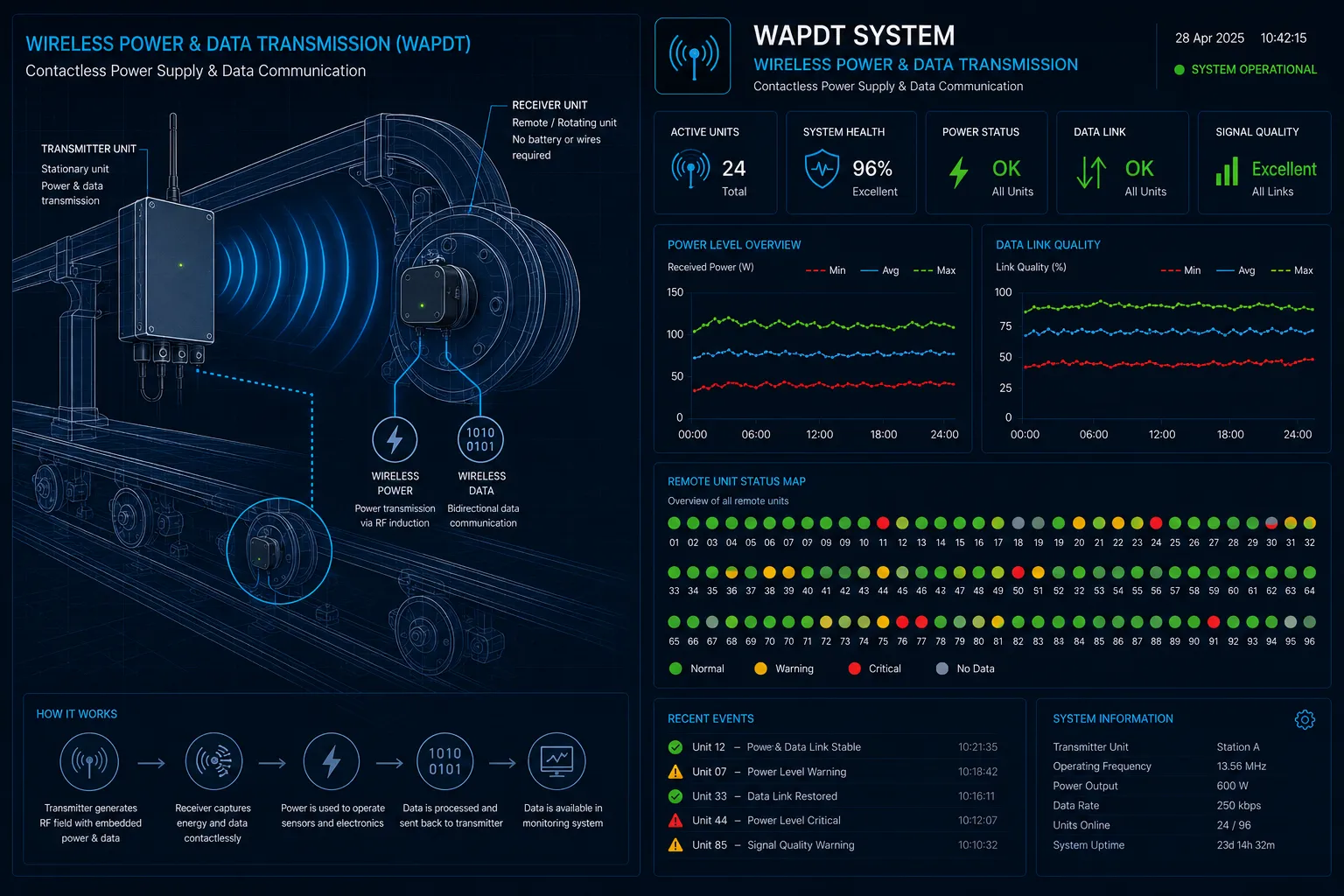
Wireless system enabling power supply and data transmission to remote or rotating units without physical electrical connections or onboard batteries.
Key features:
Wireless power transmission • Contactless data communication • No onboard power required • Low maintenance • High reliability
Industries:
Transport Systems • Industrial Automation • Special Applications
It allows remote units to operate without onboard batteries or wired power supply, significantly reducing maintenance requirements and improving system reliability.
The system can activate and control remote sensor units and retrieve their data, making it particularly suitable for applications involving rotating, moving, or difficult-to-access components.
This technology enables new possibilities for monitoring and control in environments where traditional wiring is impractical or impossible.
Smart Ropeway & Cabin Systems
Advanced monitoring, control, and safety solutions for ropeway and cabin-based transport systems
Intelligent Cabin System (IIoT-IC)
Smart Monitoring & Control for Ropeway Cabins
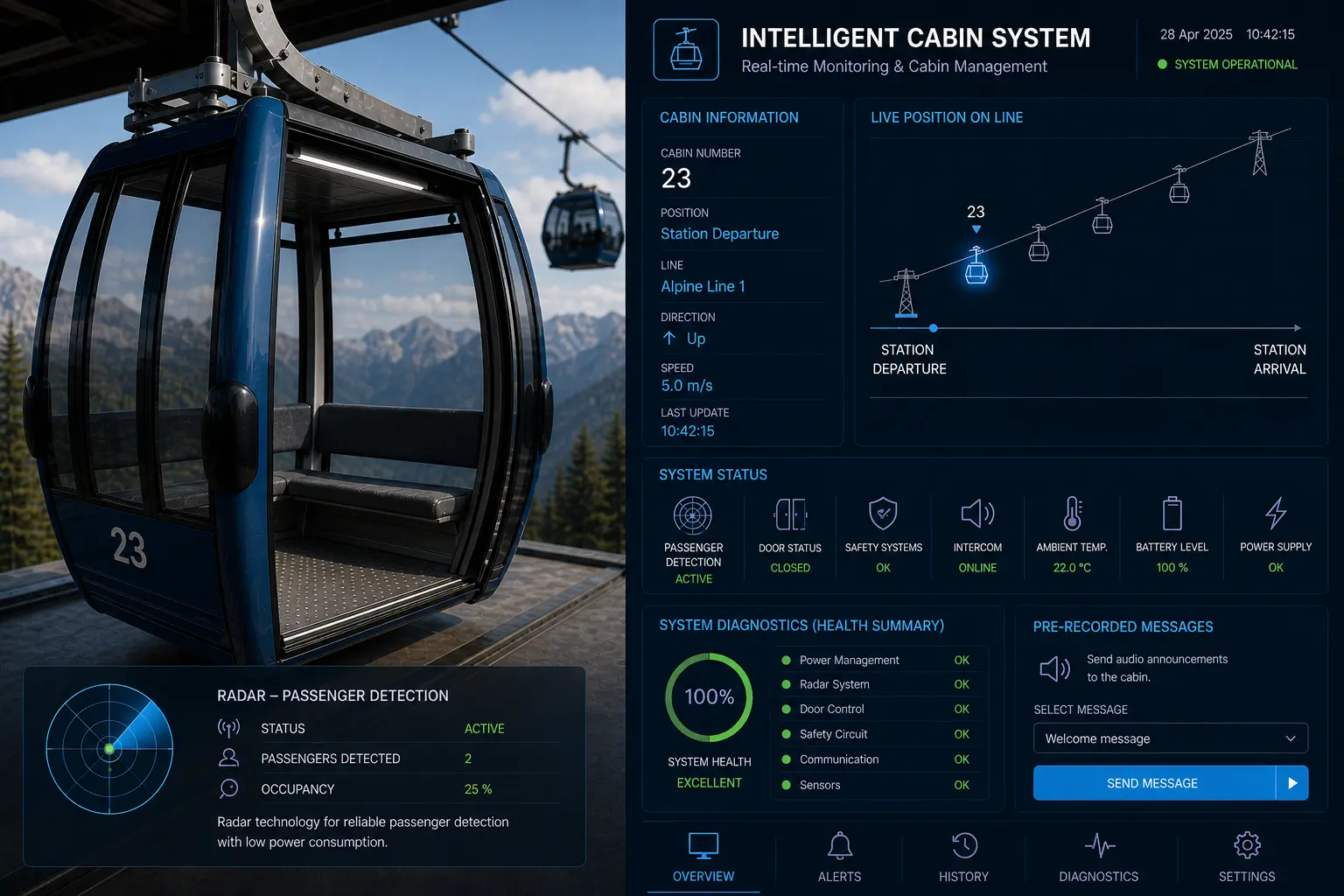
Low-power monitoring and control system for ropeway cabins, enabling real-time supervision of cabin status, passenger presence, environmental conditions, and onboard systems.
Key features:
Cabin status monitoring • Passenger detection • Battery & system supervision • Automated lighting control • Low-power communication
Industries:
Cable Cars • Ropeways • Automated Transport Systems
The system can monitor internal cabin conditions such as temperature, battery status, electrical contacts, and system activity. It also supports passenger presence detection and enables automated or scheduled activation of cabin lighting based on environmental conditions or predefined logic.
Communication is typically implemented using low-power wireless technologies such as LoRaWAN or similar systems, allowing efficient data transmission over long distances with minimal energy consumption.
The system can be extended with additional functionalities such as onboard communication and advertising systems, including preconfigured messages that can be triggered automatically, remotely, or based on GPS position.
It can also serve as a backup communication system for existing onboard communication solutions, increasing system redundancy and reliability.
Furthermore, the platform allows integration with additional monitoring systems, including wind impact, cabin oscillation, and GPS-based position tracking along the ropeway line.
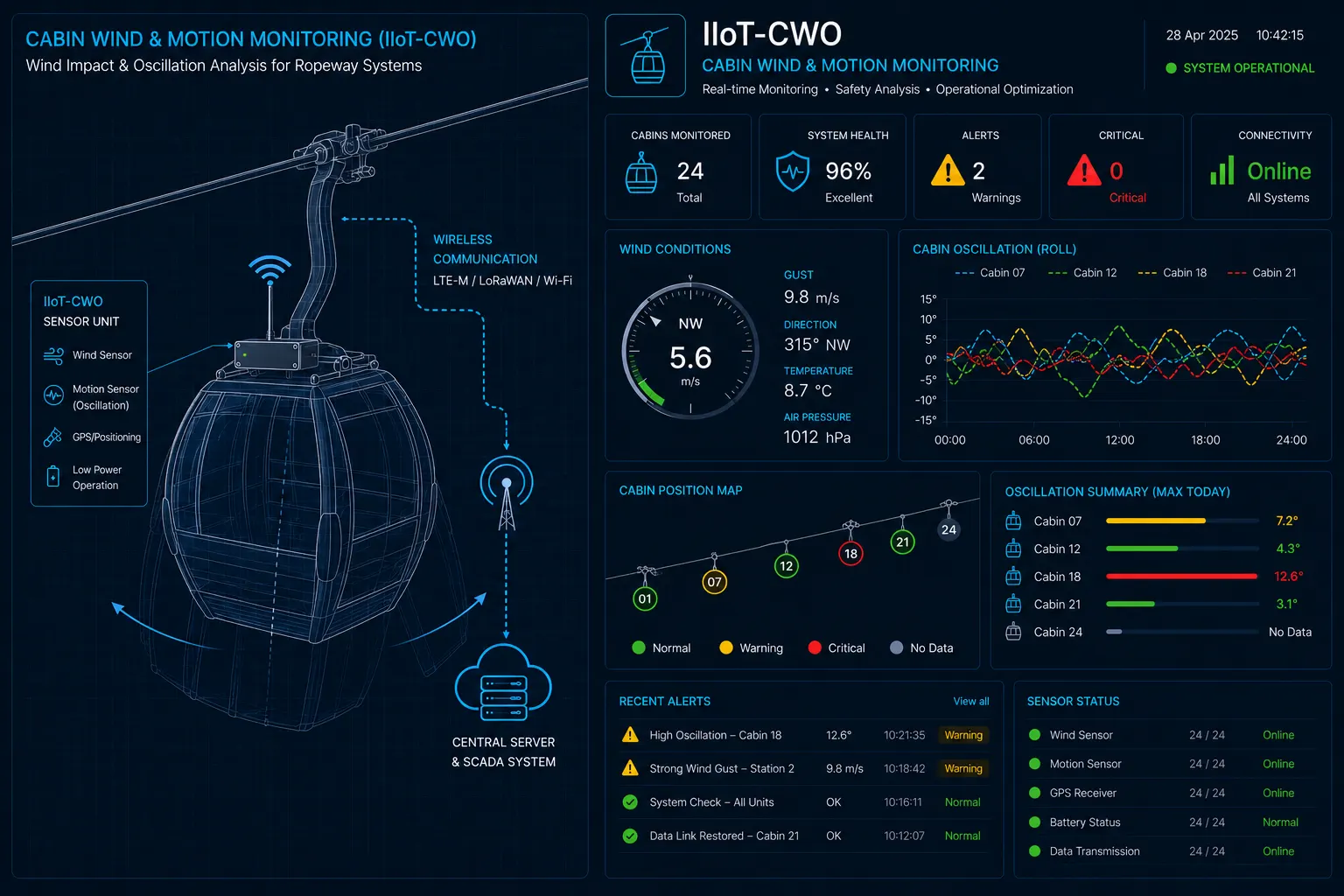
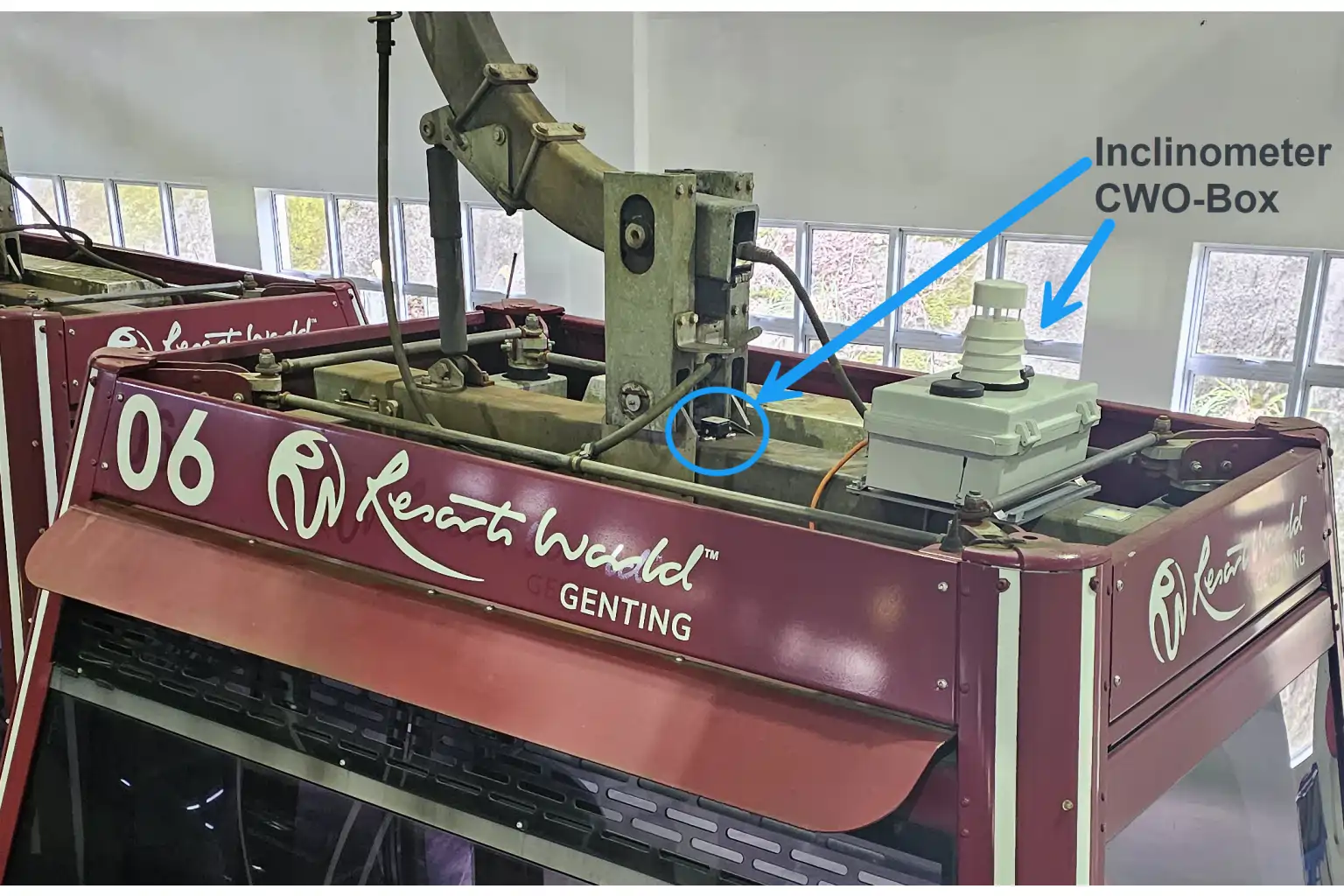
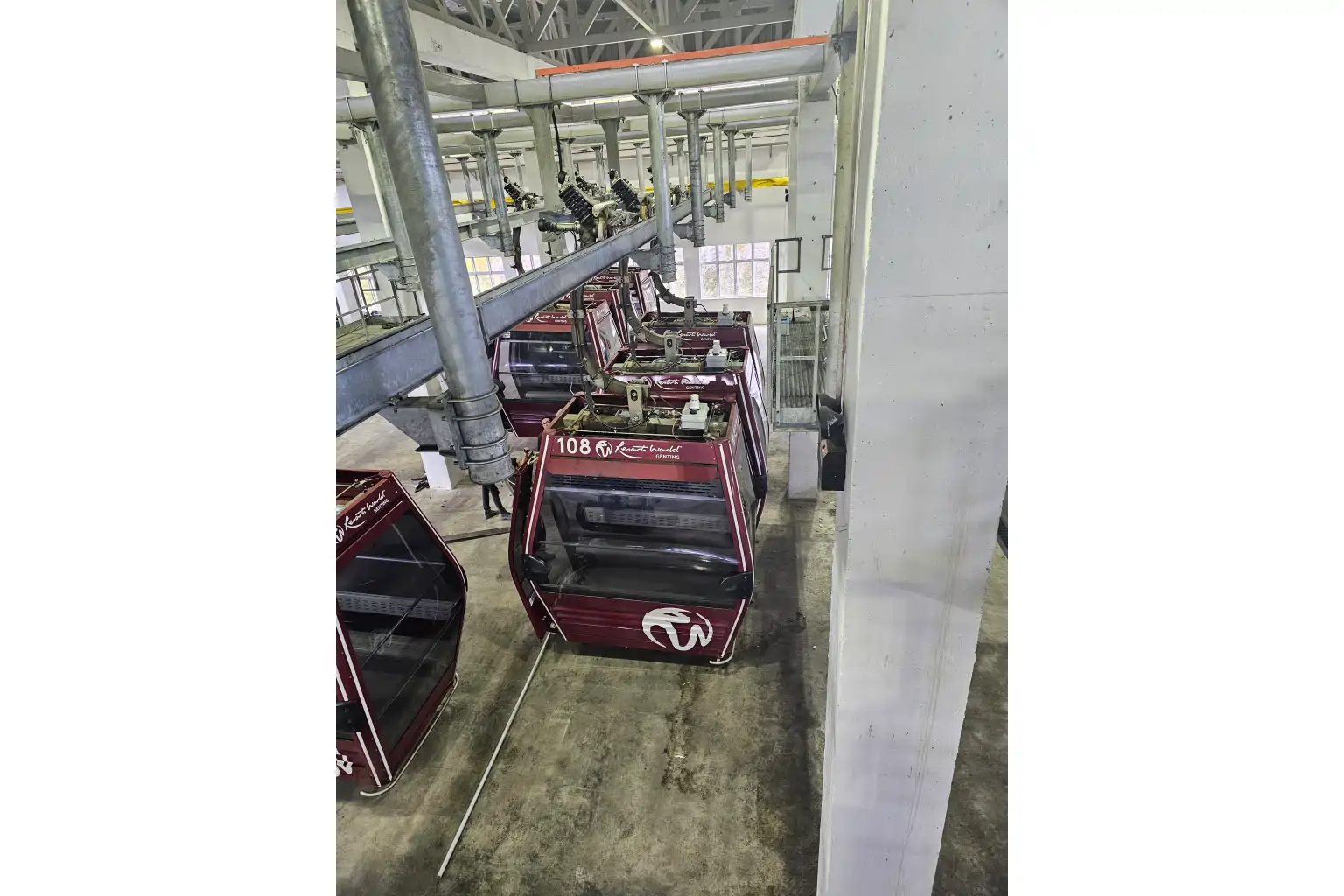
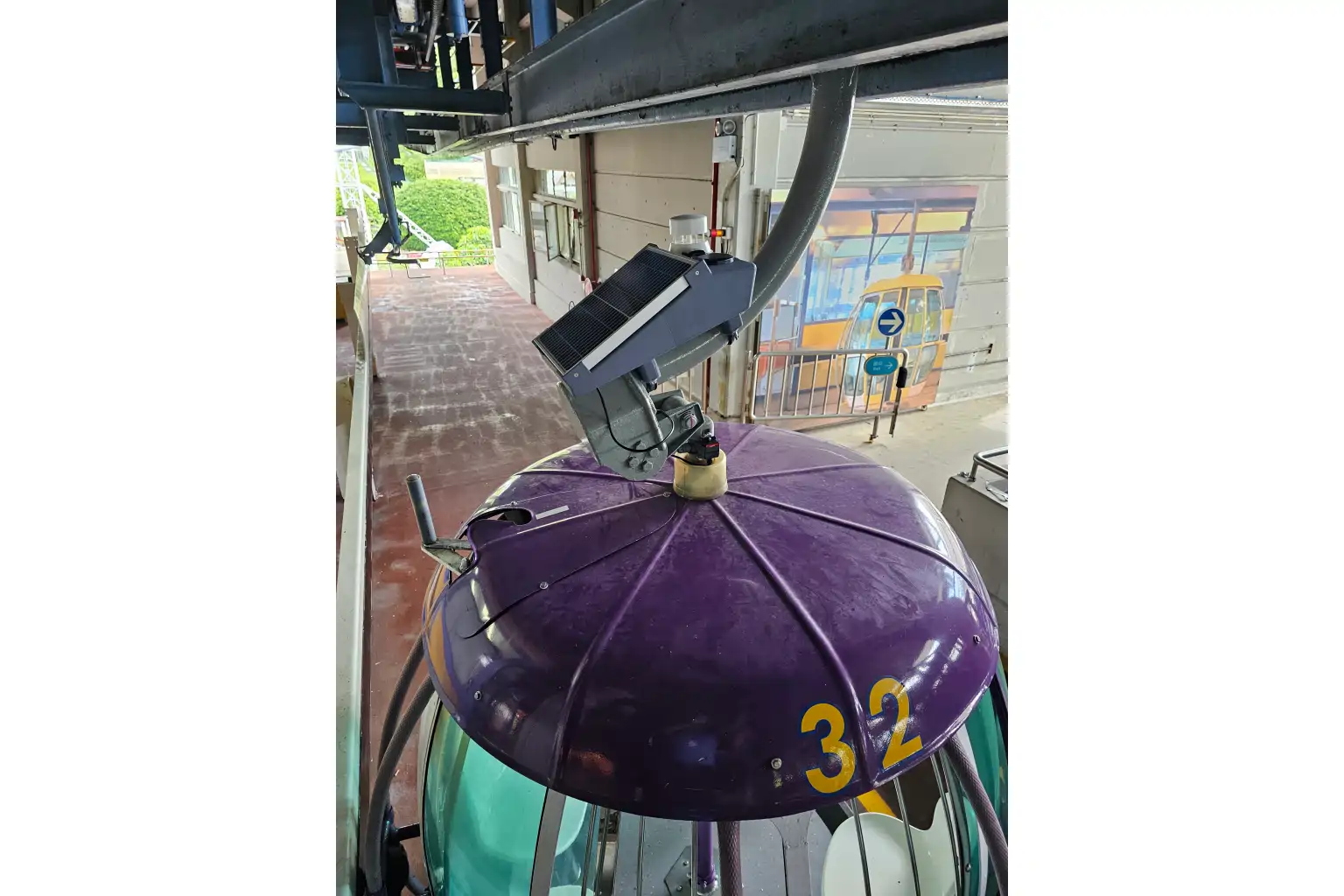
Cabin Wind & Motion Monitoring (IIoT-CWO)
Wind Impact & Oscillation Analysis for Ropeway Systems
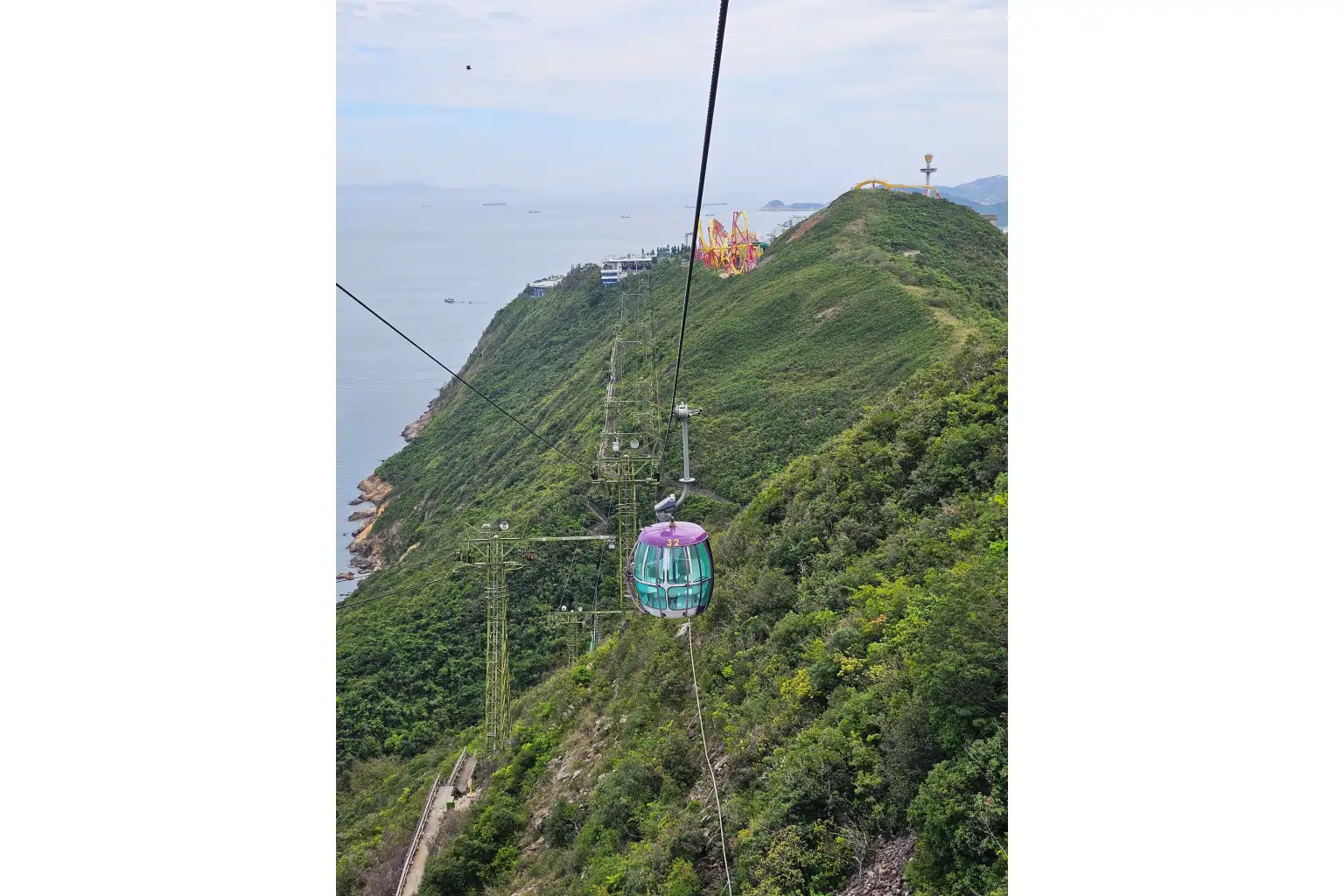
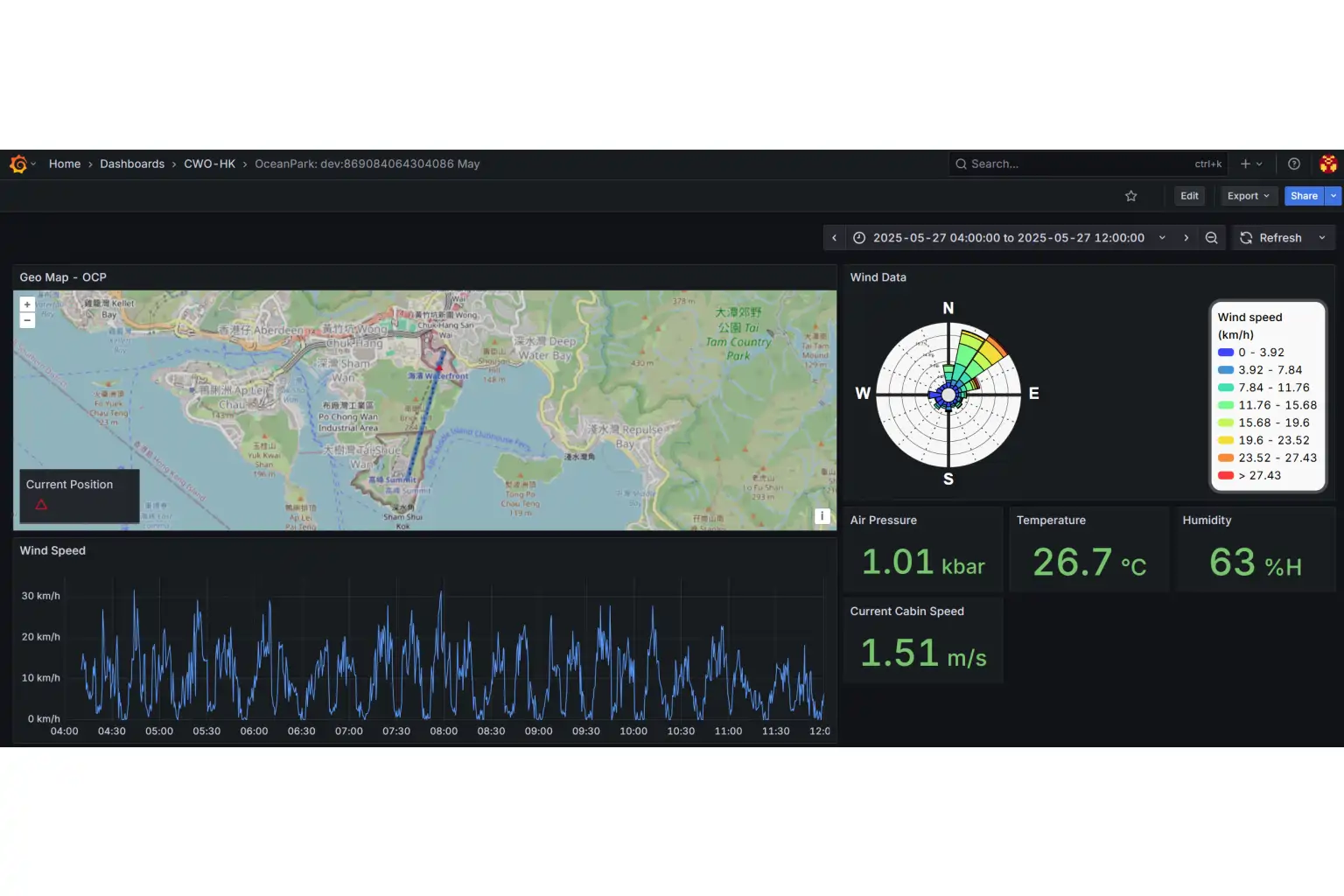
Monitoring system for analyzing cabin oscillation and wind impact in ropeway installations, supporting safety evaluation and operational optimization.
Key features:
Wind measurement • Oscillation monitoring • GPS positioning • Energy-efficient operation • Wireless communication
Industries:
Cable Cars • Ropeways • Mountain Transport Systems
It combines multiple sensors including wind measurement, oscillation detection, and GPS positioning to provide a comprehensive understanding of cabin movement and environmental impact.
Data is collected locally and transmitted to a central system using wireless communication technologies such as LTE-M, LoRaWAN, or Wi-Fi, depending on the installation environment.
The system enables detection of critical oscillation levels, supports safety analysis, and can be used to optimize operational parameters in challenging environmental conditions.
Cabin Door Control & Safety System (IIoT-DC)
Electronic Safety Monitoring for Cabin Door Systems
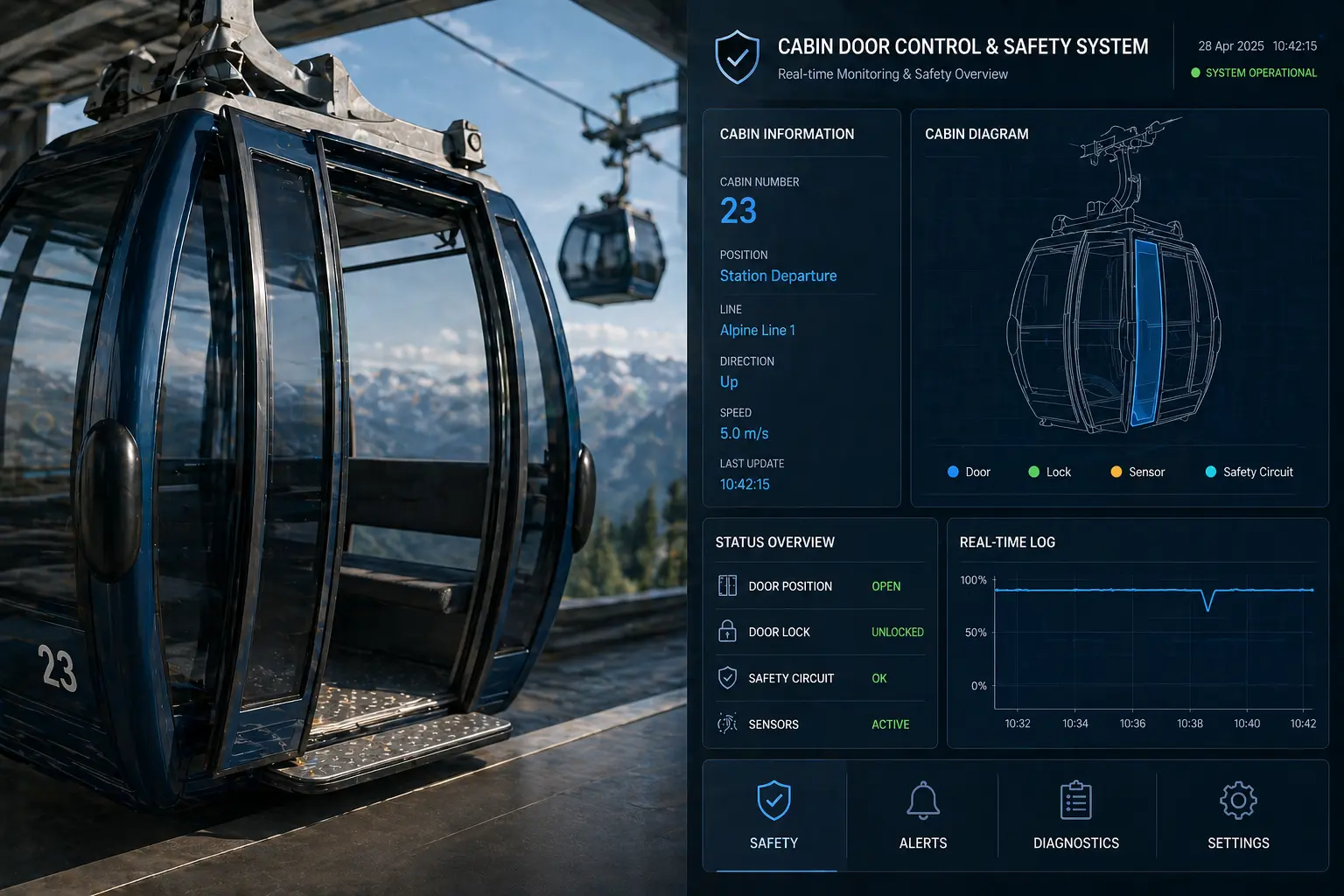
Safety system for monitoring and controlling cabin door locking mechanisms using electronic and radio-frequency-based technologies.
Key features:
Door lock monitoring • Cabin identification • Safety PLC integration • SCADA visualization • Contactless sensing technologies
Industries:
Cable Cars • Amusement Rides • Public Transport Systems • Automated People Movers (APM)
The solution replaces or enhances traditional mechanical monitoring systems by using electronic transponders and radio-frequency-based detection methods, integrated with safety PLC systems to meet required safety standards.
The system is capable of identifying individual cabins and tracking their presence within defined monitoring zones, enabling real-time visualization and system supervision via SCADA interfaces.
New developments include passive induction-based solutions that eliminate the need for onboard power sources such as batteries, further increasing system reliability and reducing maintenance requirements.
Safety & Positioning Systems
Real-time tracking and safety solutions for personnel, vehicles, and transport systems in complex environments
RTLS – Worker Safety Tracking
Real-Time Location & Safety Monitoring for Personnel
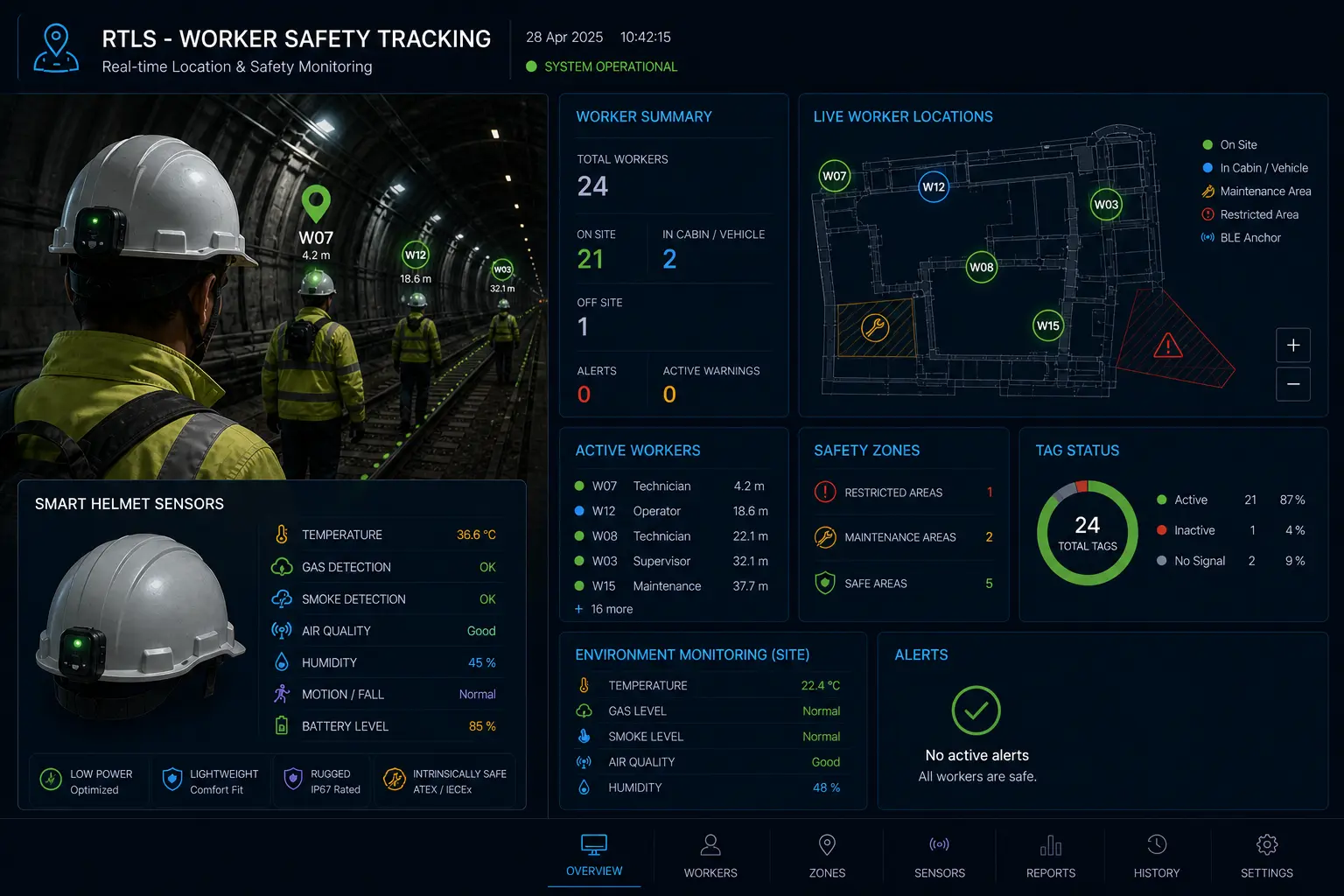
Real-time tracking system for monitoring personnel location and safety conditions in complex environments such as tunnels, industrial sites, and transport infrastructure.
Key features:
Real-time positioning • Safety alerts • Environmental sensing • Wireless communication • Central monitoring
Industries:
Railway Systems • Tunnels • Industrial Sites • Infrastructure Projects
The system uses wireless sensors and positioning technologies to track worker location within tunnels, industrial facilities, or infrastructure sites. In addition to positioning, it integrates environmental sensors such as temperature, gas detection, and smoke monitoring to assess safety conditions continuously.
Data is transmitted to a central system where operators can monitor personnel distribution, detect critical situations, and trigger alerts or evacuation procedures if required.
The system can be integrated with vehicle-based sensors, such as motion detection or lidar, to reduce the risk of collisions between workers and moving equipment.
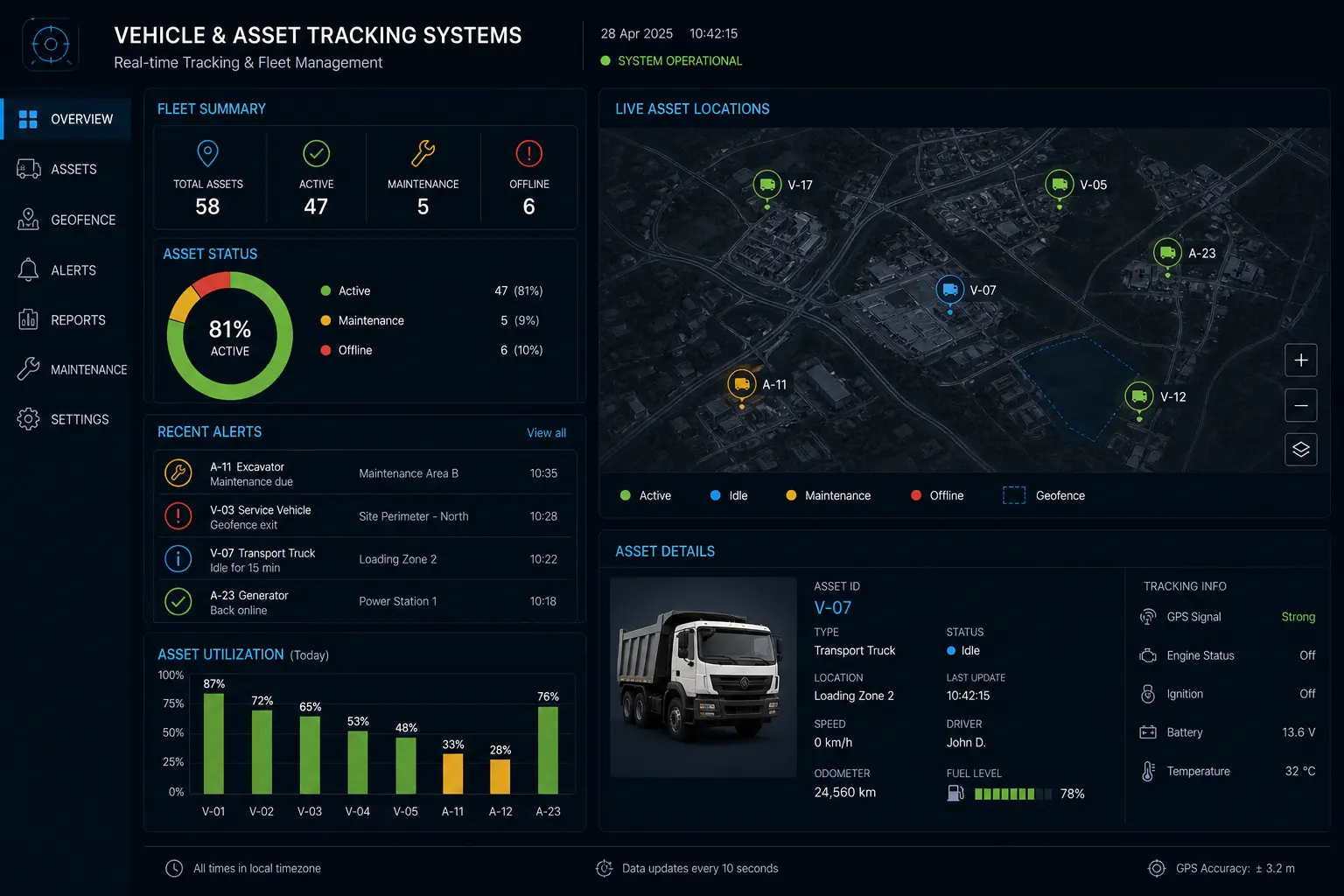
Vehicle & Asset Tracking Systems
Monitoring of Vehicles and Equipment in Operational Environments
Tracking system for monitoring the movement and availability of vehicles, equipment, and mobile assets within operational areas such as depots, emergency services, and industrial facilities.
Key features:
Asset tracking • Entry/exit monitoring • Real-time status • RF/UWB technologies • Central system integration
Industries:
Emergency Services • Industrial Facilities • Logistics • Transport Systems
The system typically uses radio-frequency or microwave-based identification technologies, including UWB or similar solutions, to detect when vehicles enter or leave specific zones.
This allows operators to maintain real-time awareness of available resources, track asset usage, and coordinate operations more effectively.
The system can be integrated with existing communication systems and extended to support multi-site environments, enabling centralized monitoring of distributed fleets and equipment.
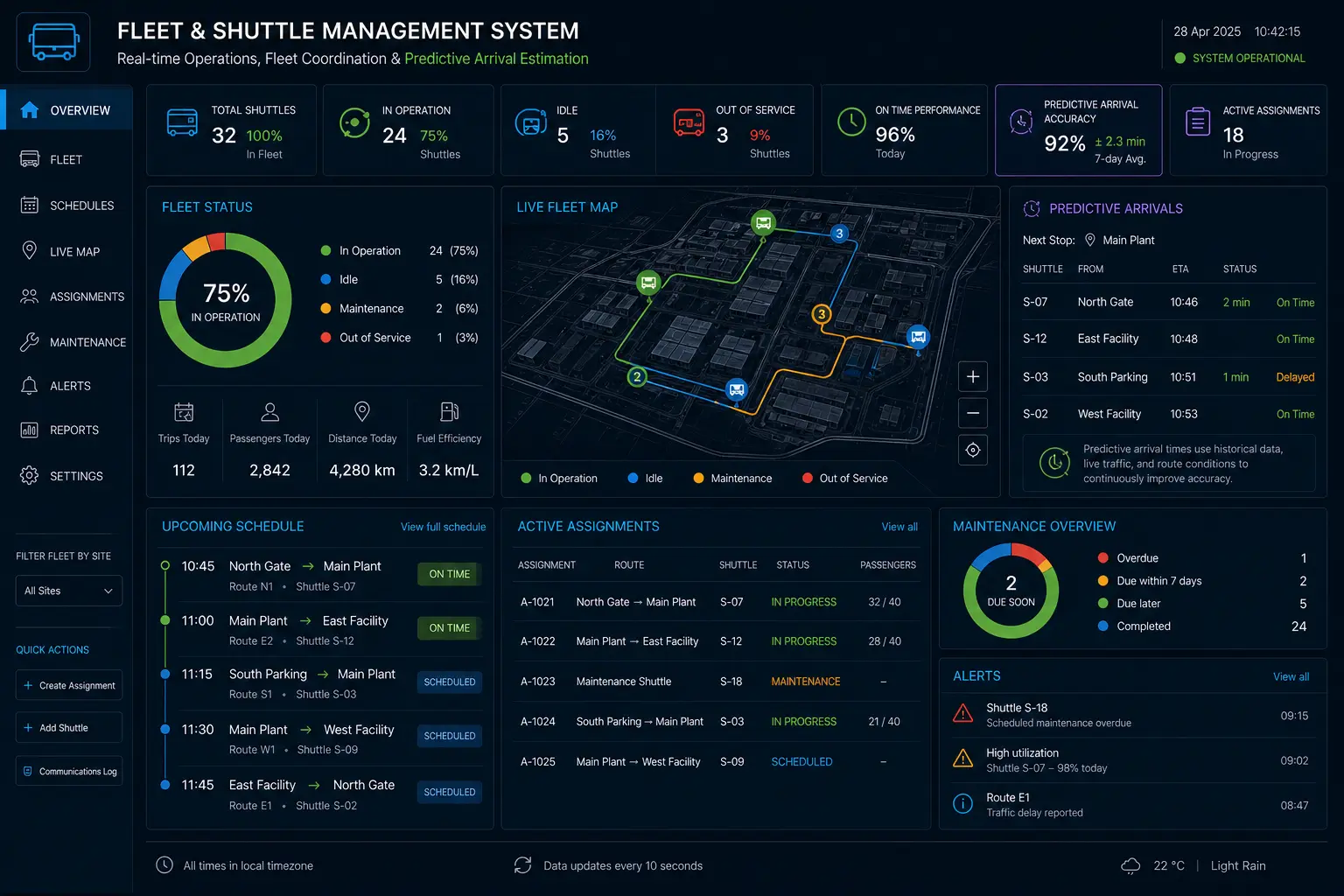
Fleet & Shuttle Management System (SIMS)
Integrated Tracking & Coordination of Transport Systems
Automated system for tracking and managing vehicle fleets and shuttle systems, enabling real-time positioning, coordination, and operational planning.
Key features:
Real-time tracking • GPS positioning • Route monitoring • Automated coordination • System integration
Industries:
Public Transport • Shuttle Systems • Industrial Transport • Logistics
The system combines multiple technologies, including GPS positioning, electronic barriers, and transponder-based identification, to determine the exact location and status of each vehicle.
It enables predictive arrival estimation, automated scheduling support, and real-time status updates across different operational points.
By integrating with central control systems, SIMS provides operators with a comprehensive overview of fleet movement and supports optimized coordination of transport processes.
Data Platforms & SCADA Integration
Scalable data acquisition, processing, and visualization solutions for industrial automation and monitoring systems
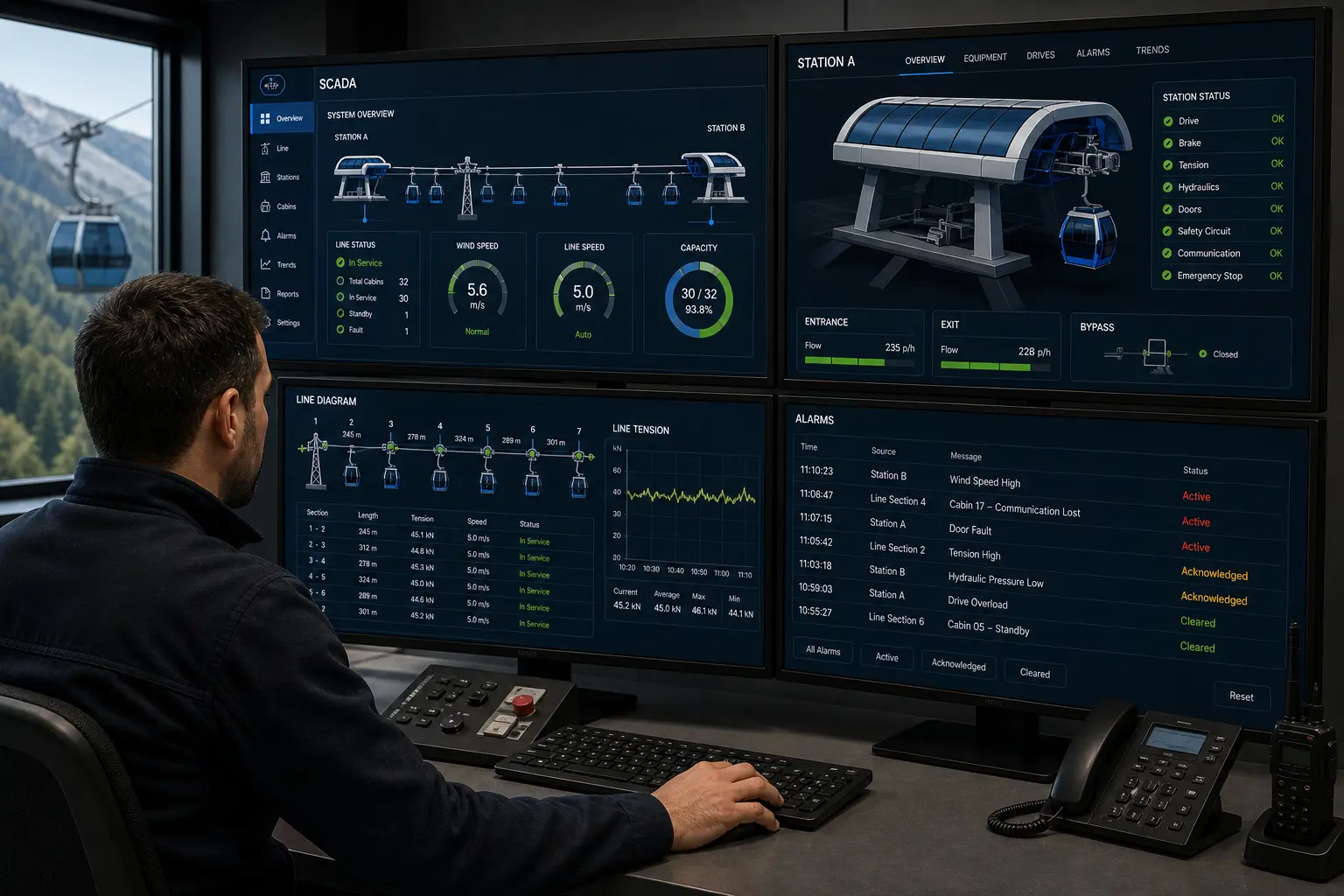
Independent SCADA & Visualization (OPC-UA)
Decoupled Monitoring, Visualization & Remote Access Platforms
Independent SCADA and visualization systems for real-time monitoring, data access, and user-friendly interaction with industrial processes without interfering with primary control systems.
Key features:
OPC-UA integration · Parallel SCADA operation · Real-time visualization · Alarm & event handling · Web-based dashboards · Mobile access · Secure remote access
Industries:
Industrial Automation · Transport Systems · Infrastructure · Energy · Smart Facilities
Data is accessed via a dedicated OPC-UA server with its own database structure, ensuring that the monitoring system is fully decoupled from the primary control infrastructure.
This architecture enables safe system extensions, independent analysis, and secure remote access without affecting operational control processes.
The systems provide intuitive interfaces for visualizing and interacting with industrial data in real time.
They are typically implemented as web-based dashboards accessible from desktops, tablets, and smartphones, allowing operators to monitor system status from anywhere.
Features include real-time data visualization, alarm handling, historical data analysis, and customizable dashboards tailored to specific operational needs.
The system supports flexible deployment and can be integrated with existing SCADA platforms or operate as a standalone solution, depending on the project architecture.
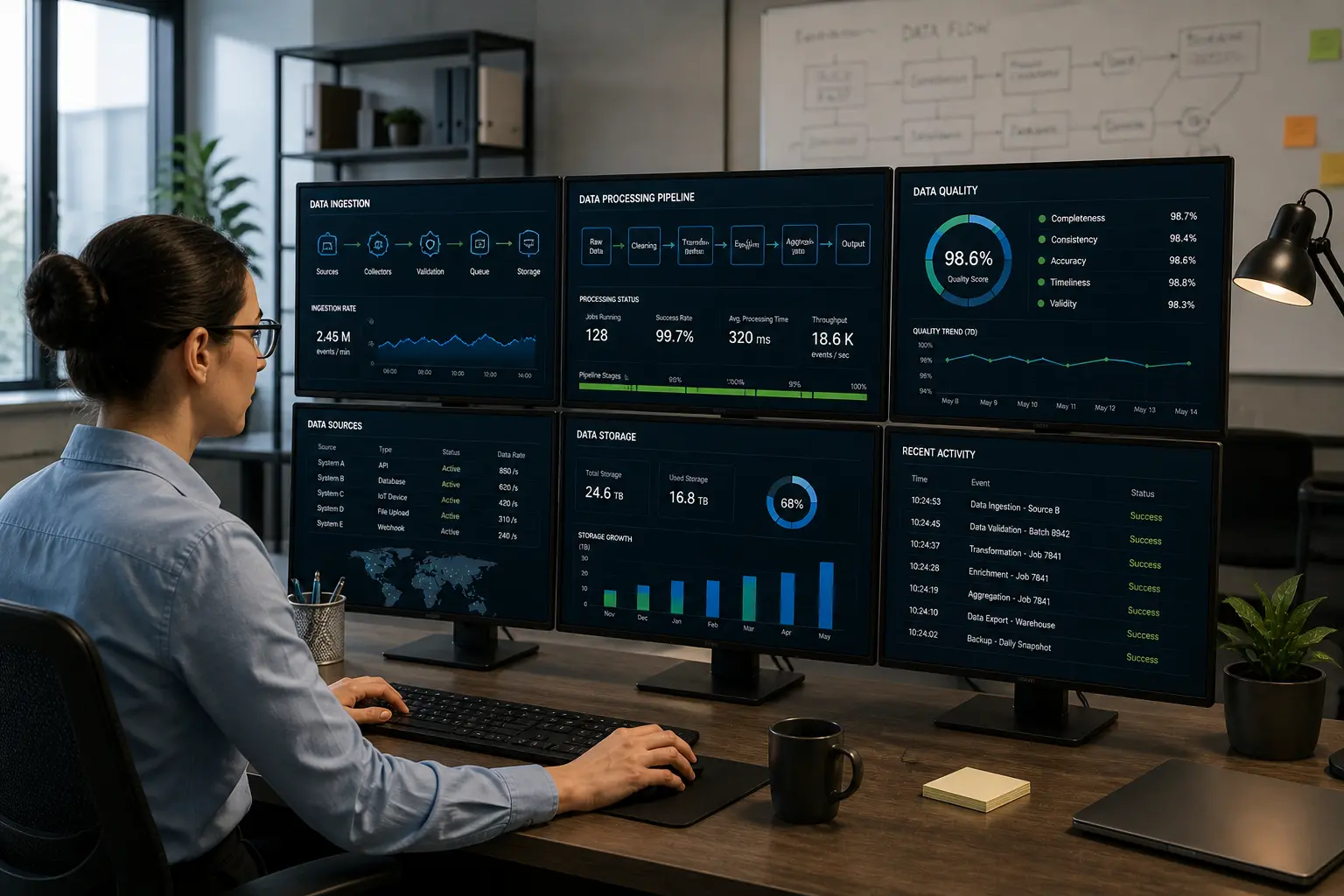
Data Collection & Processing Platforms
Centralized Data Acquisition & Analysis Systems
Flexible data acquisition systems for collecting, processing, and analyzing data from distributed sensors and industrial systems.
Key features:
Multi-source data acquisition • Central data processing • Scalable architecture • Real-time & historical analysis • Integration-ready
Industries:
Industrial Automation • Transport Infrastructure • Energy • Automation
Data can be acquired through various communication interfaces such as fieldbus systems, Ethernet-based networks, wireless communication, or cloud integration.
The system enables both real-time monitoring and long-term data storage, supporting advanced analysis, trend evaluation, and reporting.
Its modular architecture allows adaptation to different project requirements and seamless integration with SCADA systems, analytics tools, and higher-level data platforms.
Passenger Flow & Analytics Systems
Data-driven solutions for analyzing passenger movement, optimizing capacity, and improving operational efficiency
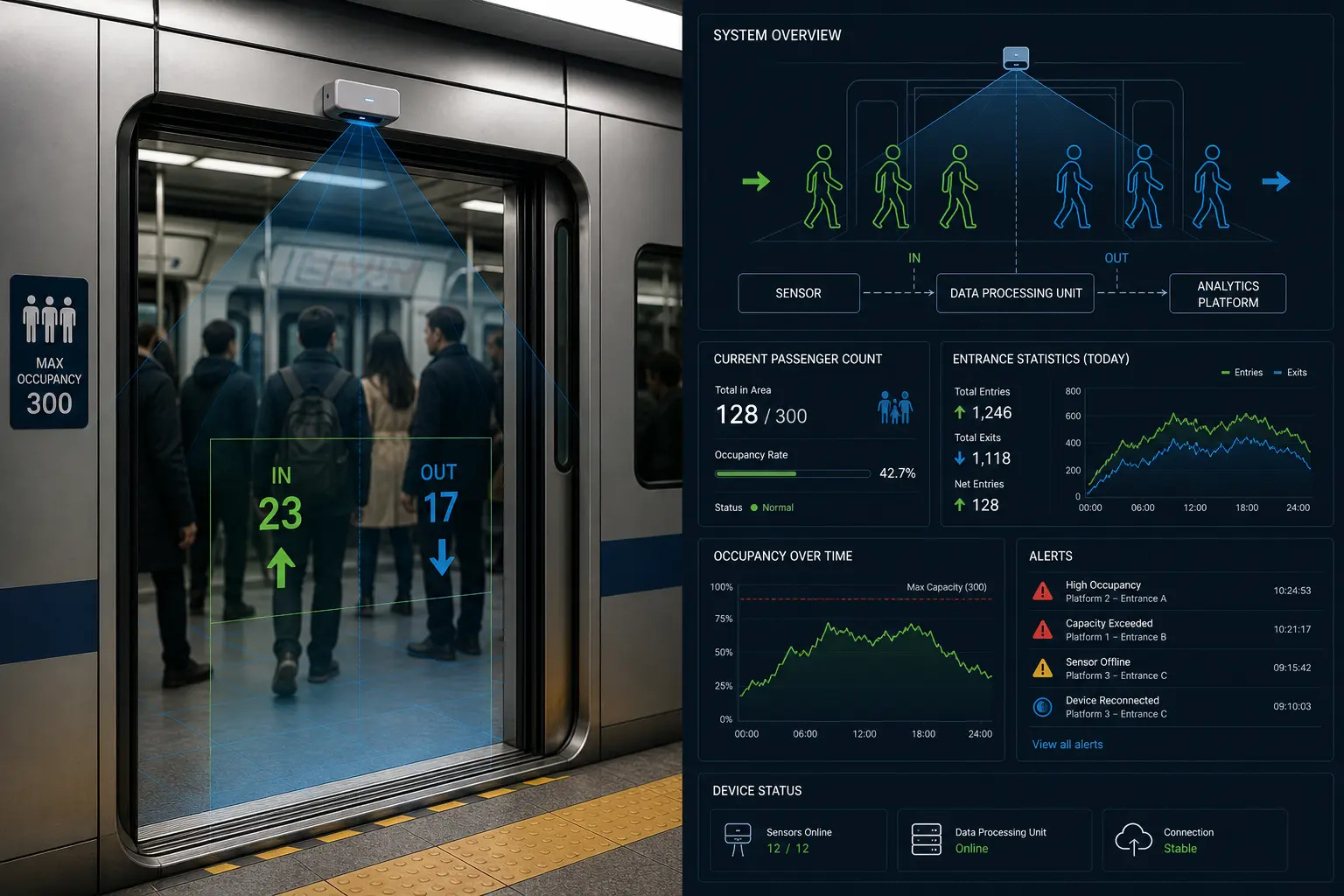
People Counting Systems
High-Resolution Passenger Flow Monitoring
Accurate counting and analysis of passenger flows in vehicles, stations, and public environments to support operational optimization and data-driven decision making.
Key features:
High-accuracy counting • Entry/exit tracking • Real-time data • Historical analysis • Integration with control systems
Industries:
Public Transport • Rail Systems • Stations • Public Facilities
The system detects and counts individuals entering and exiting vehicles, stations, or controlled areas, providing high-resolution data for operational analysis.
Collected data can be used for multiple purposes, including passenger statistics, capacity planning, and optimization of transport schedules.
In addition, the system can trigger automated actions based on usage patterns, such as maintenance scheduling (e.g., cleaning cycles after a defined number of uses) or dynamic system adjustments.
Integration with central data platforms enables real-time monitoring, historical analysis, and advanced evaluation of passenger movement patterns.